

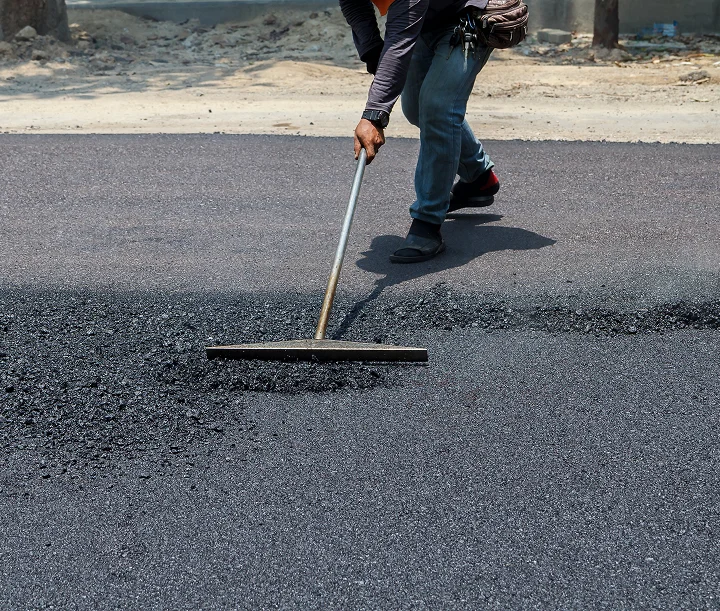
At some point, every commercial parking lot, access road, or industrial yard crosses a line where sealcoating and crack filling stop being enough. The pavement is still functional, but it’s visibly tired, and the question shifts from “how do we maintain this” to “how do we fix this.” That’s where the decision gets more expensive to get wrong: milling, overlay, and full replacement solve different problems, cost differently, and last for different amounts of time, and picking the wrong one usually means paying for the pavement twice.
This guide walks through how to tell which category your pavement actually falls into, what each option involves, and how the costs and lifespans compare, so the conversation with your contractor starts from an informed place instead of a guess.
When Your Asphalt Is Past Routine Maintenance
Sealcoating and crack sealing work when the underlying structure of the pavement is still sound and the damage is limited to the surface layer. A properly installed commercial asphalt surface typically lasts 20 to 30 years with regular maintenance, including sealcoating every 3 to 5 years and prompt crack repair, but that maintenance schedule only extends the life of pavement that hasn’t already failed structurally. Our asphalt maintenance guide goes deeper on that 25%-damage threshold, which is the same industry benchmark that separates a maintenance conversation from the rehabilitation conversation this guide covers.
The signs that a lot has moved past routine maintenance and into rehabilitation territory include widespread alligator cracking (a web of interconnected cracks that signals fatigue failure, not just surface wear), potholes that keep returning after patching, visible rutting in wheel paths, standing water that indicates the base has lost its ability to drain, and edge cracking or crumbling along the pavement perimeter. One or two of these in isolation might still be a repair. Several of them together, especially over a large percentage of the lot, mean it’s time to talk about milling, an overlay, or replacement instead of another round of patching.
What Is Asphalt Milling? How It Works and When It’s the Right Call
Milling is the process of grinding off the top layer of existing asphalt, typically an inch or more, using a specialized milling machine, leaving a clean, textured surface. Milling removes the most weathered, oxidized layer of the pavement, corrects surface irregularities like rutting and minor unevenness, and creates a properly textured surface for whatever comes next: a new overlay, a full-depth replacement, or in some cases a milled surface left temporarily open to traffic during a phased project.
Milling on its own doesn’t create a new wearing surface. It’s almost always paired with either an overlay (mill-and-fill) or full replacement afterward. Federal Highway Administration guidance on pavement preservation notes that milling before an overlay is recommended when the existing surface shows a highly oxidized, stiff condition prone to further distress if simply paved over, or when the pavement has rutting, roughness, or slope issues that an overlay alone wouldn’t correct. Milling is also the right call when curb height or drainage grades can’t absorb the extra thickness a new layer would add without milling first.
What Is a Paving Overlay? When Overlays Work (and When They Don’t)
An overlay is a new layer of asphalt placed on top of an existing surface, either after milling (mill-and-fill) or, less commonly on commercial sites, directly over an unmilled surface that’s still in reasonably good structural condition. Overlays are a cost-effective way to extend pavement life when the base and sub-base are still structurally sound and the problems are concentrated in the surface layer: oxidation, minor cracking, and surface roughness rather than deep structural failure.
Overlays work well when the existing pavement doesn’t show significant structural distress, when drainage and curb elevations can accommodate the added thickness, and when the underlying base has been confirmed sound through inspection. They don’t work well as a long-term fix over pavement with widespread alligator cracking, base failure, or drainage problems underneath the surface. Paving over a structurally failed base without addressing what’s underneath tends to produce reflective cracking, meaning the same cracks reappear in the new surface within a year or two, because the overlay was never the actual fix for the underlying problem.
Full Replacement: When the Base Is Too Far Gone
Full replacement means removing the existing asphalt down to the base, addressing any subgrade or drainage issues underneath it, and rebuilding the pavement structure from the ground up. This is the right call when the pavement shows structural failure rather than just surface wear: extensive alligator cracking across a large percentage of the lot, potholes that keep recurring at the same locations, visible base failure, or drainage problems that a surface treatment can’t correct because the water issue originates below grade.
Replacement costs more up front than milling or an overlay, but it resets the clock on the pavement’s full lifespan rather than extending a structure that’s already compromised. It’s also the point where grading and drainage deserve a second look, since asphalt that failed from base saturation or poor drainage will fail again on the same schedule if the underlying water problem isn’t corrected during the rebuild.
Cost Comparison: Milling vs. Overlay vs. Replacement Per Square Foot
Exact pricing depends on lot size, existing condition, access, and site-specific factors, but the relative cost relationship generally holds across commercial projects:
Milling alone (when done as prep for a later phase or a standalone corrective pass) is typically the least expensive per-square-foot line item of the three, since it’s a single grinding pass without new material.
Mill-and-fill (milling plus overlay), which we generally see run in the 2-4 per square foot range on Charleston-area commercial lots, costs more than milling alone but substantially less than full replacement, since it reuses the existing base and sub-base rather than rebuilding them.
Full replacement, typically 4-8 per square foot in this market, costs the most because it includes removal of the old surface, correction of any base or subgrade issues, and a complete new pavement structure.
The National Asphalt Pavement Association and the Federal Highway Administration’s pavement preservation guidance both frame this the same way: preservation treatments like milling and thin overlays are dramatically more cost-effective per year of pavement life when applied at the right point in the pavement’s life cycle, but they stop being cost-effective, and can actually waste money, when applied to pavement that has already failed structurally. The scoping conversation with your contractor should center on which category your pavement actually falls into, not which option costs less today.
Lifespan Comparison After Each Treatment
Milling and overlay (mill-and-fill): Typically extends pavement life by 8 to 12 years when applied to a structurally sound base, depending on traffic loads and maintenance afterward.
Full replacement: Resets the pavement to a full lifespan, generally 20 to 30 years with regular sealcoating and maintenance, since the entire structure is new.
Sealcoating alone (for comparison): Extends surface life by 3 to 5 years per application but doesn’t address any structural issue, which is why it’s only appropriate before a lot crosses into the rehabilitation categories above.
The lifespan gap between these options is exactly why getting the diagnosis right matters more than the sticker price. An overlay applied to a structurally failed lot might look like the cheaper option today and turn into a second full-cost project within a year or two once reflective cracking sets in.
Case Scenarios: Parking Lot, Road, and Industrial Yard
Retail parking lot with surface wear but no structural failure. A shopping center lot with oxidation, minor cracking, and fading striping, but no widespread alligator cracking or potholing, is typically a strong mill-and-fill candidate. Milling corrects the surface texture and removes the most weathered material, and the overlay gives the lot another decade-plus of service life at a fraction of full replacement cost. This is common on our retail and shopping center paving projects across the Charleston area.
Commercial access road with drainage-driven failure. A private access road showing potholes that keep returning at the same low points usually has a base or drainage issue, not just a surface problem. Milling and overlaying this kind of road without correcting the underlying drainage typically produces the same failure again within a season or two. Full replacement, paired with a look at the site’s grading and drainage design, is usually the more durable and ultimately cheaper path.
Industrial yard under constant heavy load. Distribution yards, manufacturing plant aprons, and other industrial pavement under constant forklift, trailer, and heavy-truck traffic wear differently than a standard parking lot. Even a base that’s structurally sound may need a heavier-spec overlay than a typical retail lot, since a residential-grade mill-and-fill won’t hold up to that traffic pattern. Industrial paving projects generally warrant a site-specific evaluation rather than a standard treatment applied by default, and our work with distribution and logistics centers across the Lowcountry follows the same logic: match the treatment to the actual traffic load, not a generic spec.
HOA and multifamily communities. Neighborhood roads, drive lanes, and shared parking areas at HOA properties and apartment and condo communities wear unevenly, heavier near entrances and mail kiosks, lighter along interior drive lanes, which often makes these sites good candidates for phased mill-and-fill work rather than an all-or-nothing replacement across the entire property.
Hospitals and other continuity-critical facilities. Ambulance access, ADA-compliant routes, and constant patient traffic mean healthcare facility paving projects need to stay open and safe throughout construction. Phased milling and overlay work, done in sections rather than closing the whole lot, is often the more practical path for these sites even when a full replacement is technically the better long-term fix.
What Charleston’s Climate Adds to the Decision
South Carolina’s heat and humidity accelerate surface oxidation compared to drier, cooler climates, which is part of why sealcoating every 3 to 5 years matters more here than in some other regions. That same climate, combined with heavy seasonal rainfall, also means drainage-related base failure shows up faster in Charleston than in markets with less rain and a lower water table. When evaluating milling, overlay, or replacement on a Lowcountry property, factor in not just the pavement’s current condition but whether the site’s drainage is actually capable of protecting whatever treatment gets applied. An overlay placed over a drainage problem that hasn’t been fixed is asking the same base to fail the same way again.
Getting an Accurate Diagnosis Before You Choose
The honest starting point for this decision is a site assessment, not a guess from a windshield survey. A contractor should be able to walk your lot, identify whether the distress is surface-level or structural, and explain which category your pavement falls into and why, rather than defaulting to whichever treatment happens to be easiest to schedule.
Simmons Construction has paved, milled, and rebuilt commercial and industrial surfaces across the Charleston area for more than 37 years, working with property managers, businesses, municipalities, and industrial clients on everything from single-lot resurfacing to full-facility rebuilds. Our commercial asphalt paving services cover milling, overlays, and full replacement, and every project starts with an actual assessment of pavement condition, distress type, and base integrity rather than a one-size-fits-all recommendation. If you want to go deeper on the specific distress patterns that tip a lot from a resurfacing candidate into a replacement candidate, our breakdown of signs it’s time to resurface versus replace walks through that distinction in more detail.
Not sure which category your pavement falls into? Request a free asphalt evaluation and we’ll walk the lot with you before recommending a treatment.
Frequently Asked Questions
How do I know if my parking lot needs milling, an overlay, or full replacement?
Widespread alligator cracking, recurring potholes at the same locations, visible base failure, or drainage problems that originate below the surface all point toward full replacement. Surface-level oxidation, minor cracking, and roughness without structural failure typically point toward milling and an overlay. A site assessment from an experienced paving contractor is the most reliable way to tell the difference, since the distinction isn’t always obvious from a visual inspection alone.
Is milling and overlay cheaper than full replacement?
Yes, mill-and-fill costs less per square foot than full replacement because it reuses the existing base and sub-base rather than rebuilding the entire pavement structure. It’s only the more cost-effective choice, though, when the base is actually sound. Applying an overlay over a structurally failed base often means paying for the overlay and the eventual replacement.
How long does an asphalt overlay last?
A properly installed mill-and-fill overlay on a structurally sound base typically extends pavement life by 8 to 12 years, depending on traffic loads and ongoing maintenance like sealcoating.
Can you mill and overlay asphalt that already has potholes?
It depends on what’s causing the potholes. If they’re isolated surface failures over an otherwise sound base, milling and overlaying can resolve them. If potholes keep returning at the same spots, that usually indicates a base or drainage problem that milling and overlay won’t fix, and the pothole will likely reappear in the new surface within a year or two.
Does Charleston’s climate affect how long asphalt treatments last?
Yes. Heat and humidity accelerate surface oxidation, and heavy seasonal rainfall combined with the region’s high water table can accelerate base failure where drainage isn’t performing correctly. Both factors are worth discussing with your contractor before choosing a treatment, since a lot in a low-drainage area may need a different approach than an identical lot on better-draining ground.
What factors affect the cost of asphalt milling, overlay, or replacement?
Lot size, existing pavement condition, site access, drainage requirements, and the depth of milling or new material required all affect cost. Contact a contractor for a site-specific assessment and detailed proposal rather than relying on a generic per-square-foot estimate, since Charleston’s soil and drainage conditions vary enough by site to change the real number.