

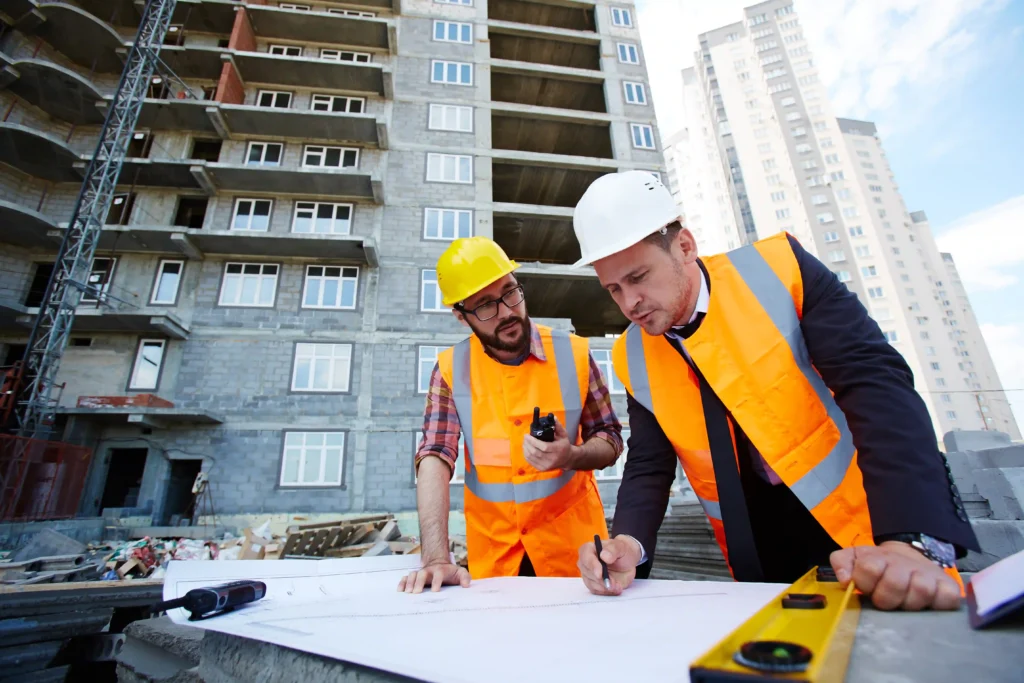
If you’re searching for a commercial general contractor in Charleston, SC, you’re likely managing a project that touches multiple disciplines — site preparation, paving, drainage, utilities, concrete, and possibly demolition or land clearing before any of it begins. A qualified commercial GC is the single point of accountability for all of it: coordinating subcontractors, managing sequences, pulling permits, and delivering a finished result on a schedule your business depends on.
What separates a qualified commercial contractor from a residential crew with ambitions is scope, experience, and the infrastructure to manage complex projects in a market as active and demanding as Charleston. The Lowcountry’s growth — from new industrial parks along the I-26 corridor to retail and office development in Summerville, Goose Creek, and Hanahan — has made commercial construction a competitive field. Knowing how to evaluate your options matters.
This guide covers what commercial general contracting actually includes, the types of projects common to Charleston’s market, what to look for when hiring, and how Simmons Construction approaches full-scope commercial work throughout the region.
What Does a Commercial General Contractor Do?
A commercial general contractor manages the full execution of a commercial construction project from mobilization through final walkthrough. That typically includes:
- Site preparation and grading — stripping and clearing the site, establishing subgrade, and managing earthwork to design elevation
- Excavation — digging for foundations, utility corridors, drainage infrastructure, and detention basins
- Utilities and piping — installing storm drainage systems, sewer lines, water service connections, and underground utility runs
- Paving — base course installation, asphalt paving, and lot striping for parking fields, access roads, and drive aisles
- Concrete — curbs, sidewalks, dumpster pads, equipment pads, and loading dock aprons
- Erosion control — silt fencing, inlet protection, and stormwater management throughout active grading
- Coordination with trades — scheduling concrete, electrical, mechanical, and landscaping work to stay on the critical path
Not every project needs all of these. A parking lot expansion at an existing facility has a very different scope than a full ground-up development. A qualified commercial GC evaluates your specific needs, provides a scope-based proposal, and manages the moving parts so you are not managing them yourself.
Types of Commercial Construction Projects in Charleston, SC
Charleston’s commercial landscape covers a wide range of project types. A commercial general contractor in this market should have demonstrated experience across multiple sectors:
Industrial and Distribution Facilities
Charleston’s port activity and I-26 corridor have driven significant industrial construction over the past decade. Distribution centers, warehousing, manufacturing plants, and flex-industrial developments require heavy-duty paving, large-scale drainage systems, utility coordination, and tight delivery schedules. Distribution and logistics center construction is among the most technically demanding project types in the region — the paving and infrastructure must hold up under continuous heavy truck traffic from day one.
Office Parks and Commercial Campuses
Multi-tenant office parks, retail centers, and mixed-use developments need site infrastructure that functions for decades without becoming a maintenance liability. That means properly engineered base courses, well-designed drainage, code-compliant ADA paths, and paving designed for the traffic loads expected across a large parking field. Office parks and commercial construction programs often bundle paving, concrete, and drainage into a coordinated scope.
HOA Roads and Community Infrastructure
Planned residential communities and HOA-governed roads have their own requirements — maintenance cycles, common area paving, and drainage that serves dozens or hundreds of properties. Contractors working in this sector need to understand HOA approval processes, phased access during construction, and the documentation that communities require at closeout. Simmons Construction’s HOA roads and driveways program is designed for exactly this environment.
Medical and Healthcare Facilities
Hospitals, medical office buildings, and outpatient facilities in the Charleston area require construction partners with experience managing active patient environments — working around fire lanes, maintaining accessible routes throughout construction, and coordinating with facility management on staging and noise. Hospitals and medical facilities work demands a different operational approach than an unoccupied development site.
Apartment and Multifamily Developments
Apartment communities and condominium projects in the Greater Charleston area have driven substantial paving and site work volume. Multifamily sites typically require a mix of heavy base course for drive aisles, curb and gutter, decorative concrete at entrances, and well-planned drainage across large impervious footprints. Apartments and condominiums represent a high-volume sector throughout the Lowcountry market.
The Commercial GC’s Role in Charleston’s Regulatory Environment
South Carolina regulates commercial construction through the South Carolina Contractor’s Licensing Board. Any commercial construction project over $10,000 requires a licensed contractor. For sitework-heavy projects, the relevant license classifications include General Contractor and Mechanical Contractor, depending on the scope and the work’s complexity.
Beyond the license itself, commercial construction in Charleston County involves:
- Land disturbance permits for projects exceeding one acre of grading
- DHEC stormwater permits where construction activity disturbs more than one acre
- City and county encroachment permits for work in the public right-of-way
- OCRM coordination on projects near tidal waters, wetlands, or coastal zones — which describes a significant portion of the Charleston market
A competent commercial GC identifies applicable permits at project inception, pulls them on your behalf, and manages inspections throughout the job. If a contractor cannot clearly explain the permitting pathway for your project, that is a signal to continue vetting.
What to Look for in a Commercial General Contractor in Charleston
Demonstrated Local Experience
A commercial contractor who regularly works in the Charleston market understands Lowcountry soil conditions, coastal drainage challenges, wet-season scheduling, and the specific expectations of local inspectors. They have relationships with local material suppliers, know lead times on asphalt and concrete, and can troubleshoot site conditions that generic contractors from outside the region will not anticipate.
Self-Performance Capability
The best commercial GCs self-perform the core sitework scopes — paving, grading, drainage, concrete — rather than brokering all of it to subcontractors. Self-performance means direct quality control, better scheduling flexibility, and a single point of accountability when something needs to be corrected. Ask specifically what is self-performed versus subcontracted when you review proposals.
Full-Scope Capacity
Projects change. What starts as a parking lot repave often reveals base failure that requires sub-base repair, drainage improvements, and possibly regrading before paving begins. A contractor with full-scope capabilities — grading, excavation, concrete, piping, drainage, and paving — can handle that scope expansion without you sourcing additional vendors mid-project.
Transparent, Itemized Proposals
Commercial construction bids should be line-item specific: mobilization, earthwork quantities, base material, paving thickness and area, concrete specifications, drainage scope, and permit allowances. Lump sum proposals with vague scope language are an invitation for scope disputes. Get three proposals written to the same scope and compare what each includes versus excludes.
References for Comparable Projects
Request project-specific references — not just a list of names, but contact information for owners or property managers on jobs similar in size and type to yours. Ask how the contractor handled site conditions that differed from what was expected, and how change orders were communicated and priced.
Questions to Ask Before You Award the Contract
- What work is self-performed versus subcontracted, and who are your primary subcontractors?
- Who will be the project superintendent on-site daily?
- How do you manage permitting — do you pull all permits, or does the owner take some?
- What is your protocol when site conditions (soil, drainage, utilities) differ from what was shown in the bid documents?
- Can you provide references for three commercial projects of similar scope completed in the last two years?
- How are change orders initiated, priced, and approved?
- What is your insurance coverage, and can you name the owner as additional insured?
Red Flags to Watch For
- Vague scope documents that do not specify material quantities, paving thickness, or drainage design
- Proposals significantly lower than others without a clear explanation of what was excluded
- Inability to provide references for comparable commercial work
- Subcontracting the majority of the scope without disclosing it
- Reluctance to pull permits or provide insurance certificates before mobilization
How Simmons Construction Approaches Commercial Work in Charleston
Simmons Construction is a commercial general contractor based in the Charleston area, self-performing sitework, paving, drainage, piping, concrete, grading, and land clearing across the Lowcountry. The company serves industrial, institutional, multifamily, retail, and HOA clients throughout Charleston, North Charleston, Summerville, Goose Creek, Hanahan, and surrounding communities.
Simmons self-performs its core scopes rather than brokering work to subcontractors — which means direct quality control and a single team accountable from mobilization through closeout. Projects handled include full ground-up commercial site development, parking lot construction and resurfacing, drainage system installation, land clearing and demolition, and ongoing maintenance programs for commercial and HOA clients.
For projects in North Charleston and surrounding industrial corridors, see our North Charleston commercial construction page. For projects in Summerville and Dorchester County, see our Summerville commercial construction page.
Frequently Asked Questions
What is the difference between a commercial general contractor and a residential contractor? Commercial GCs are licensed for commercial work under South Carolina’s Contractor’s Licensing Board, which has different requirements than residential licensing. Commercial projects typically involve more complex regulatory requirements, heavier materials specifications, larger equipment, and coordination with engineers and architects on design-build or design-bid-build programs. A residential contractor is not the right fit for commercial construction regardless of their local reputation.
How much does commercial construction cost in Charleston, SC? Costs vary enormously based on scope, site conditions, and project type. Site work for a commercial parking lot ranges from $5 to $15+ per square foot for new construction depending on base requirements, drainage complexity, and thickness specifications. Full ground-up development site work is priced on a project-specific basis after a site visit and scope review. Simmons Construction provides free estimates for commercial projects throughout the Charleston area.
Do I need a general contractor for commercial paving or site work? For projects under $10,000, a licensed GC is not legally required in South Carolina. Above that threshold, state law requires a licensed contractor for regulated commercial work. Beyond the legal requirement, a qualified commercial GC adds value through permitting management, scheduling, and quality oversight that protects your investment.
Does Simmons Construction work outside Charleston proper? Yes. Simmons Construction serves the greater Charleston metro including North Charleston, Summerville, Goose Creek, Hanahan, and Orangeburg. See our locations page for coverage details.
Get a Free Commercial Construction Estimate in Charleston, SC
If you have a commercial project in the Charleston area — whether it’s a new development, a parking lot rebuild, a drainage upgrade, or a phased maintenance program — Simmons Construction provides free, detailed estimates for qualified commercial projects.
Contact Simmons Construction to discuss your project scope, timeline, and site conditions.