

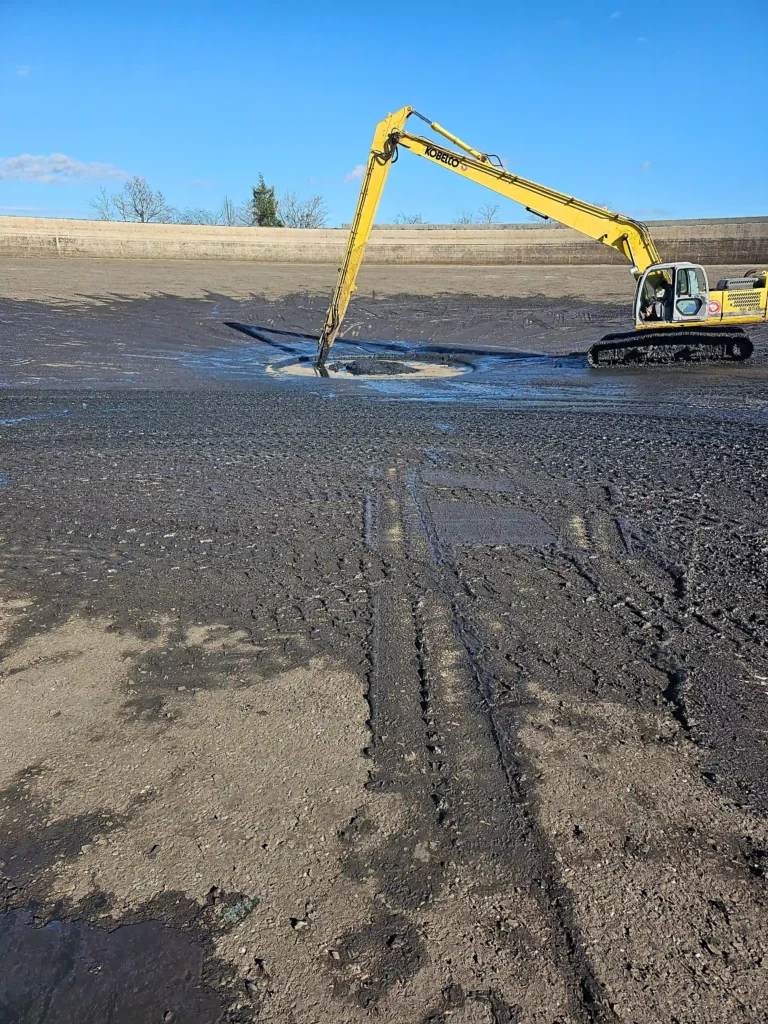
Commercial land clearing is the first real construction decision on almost every project, and it’s also the one most owners and developers budget for the least carefully. A parcel that looks straightforward from a drone photo can turn into a six-figure clearing job once you factor in stumps, wetlands buffers, and a soil report that comes back wetter than expected. Understanding realistic cost ranges, a true timeline, and what actually happens on-site helps property developers, business owners, and project managers plan a schedule that survives contact with the actual dirt.
Howell & Simmons Construction & Paving Inc. has cleared and prepared commercial sites across Charleston, SC, and the surrounding Lowcountry for more than 37 years. That timeline matters here specifically because coastal South Carolina clearing is not the same job as clearing a lot in the Piedmont or the Midwest. Soft fill, high water tables, and permitting layered across the City of Charleston, Charleston County, and state wetlands regulations all change the math. This guide walks through the cost drivers, the phase-by-phase timeline, and the Charleston-specific issues we flag for clients before the first tree comes down.
Understanding Commercial Land Clearing
Commercial land clearing involves removing vegetation, debris, and obstacles to prepare a site for construction. Compared to a residential lot, commercial projects typically involve larger acreage, more stakeholders (lenders, civil engineers, municipal reviewers), and stricter regulatory compliance from day one.
Purpose: Clearing creates a safe, accessible, buildable site while protecting environmental resources and staying inside the regulations that govern that specific parcel. Get this phase wrong and every trade that follows, grading, utilities, foundations, inherits the problem.
Scope variation: Some sites need light selective clearing around a few structures. Others need full vegetation removal, demolition of existing buildings, stump grinding across the whole footprint, and coordinated erosion control before a single yard of dirt moves. The scope, not the acreage alone, is what actually drives the price.
What Actually Drives Land Clearing Costs
Multiple variables influence the final number, which is exactly why a generic “per acre” quote off a phone call is usually wrong in one direction or the other. Here’s what we walk clients through during a site visit.
Site Size and Topography
Acreage: Larger sites benefit from economies of scale. Small sites under 1 acre commonly run $3,000-$8,000 per acre, while large sites of 10+ acres often land in the $1,500-$4,000 per acre range once mobilization costs are spread across more ground.
Topography: Flat sites cost less than sloped or uneven terrain. Steep grades require specialized equipment and additional safety measures, which can add 20-40% to the clearing line item alone.
Access: Sites with tight or restricted access need smaller equipment or a temporary access road before clearing can even start. Urban infill sites in Charleston or North Charleston commonly run 15-25% higher than an easily accessible rural parcel for this reason alone.
Vegetation Density and Type
Tree density: Heavily wooded sites cost meaningfully more than lightly vegetated ones. Dense hardwood stands can run $5,000-$15,000 per acre, while lightly vegetated sites often land between $1,500-$3,000 per acre.
Tree size: Mature trees, 24 inches in diameter or larger, require different equipment and disposal handling, which can add 30-50% versus a site dominated by smaller trees.
Stump removal: Budget $200-$500 per stump depending on size. A site with many large stumps can add $2,000-$10,000+ to the total.
Site Conditions and Obstacles
Existing structures: Old outbuildings, foundations, or full commercial structures add demolition scope. Simple structure removal runs $5,000-$15,000; complex demolition can run $20,000-$100,000+ depending on materials and building size.
Utilities: Relocating or protecting existing utilities during clearing typically adds $5,000-$25,000+, depending on how many lines cross the site and how close they sit to the clearing footprint.
Rocks, boulders, and buried debris: Sites with significant subsurface obstacles add $1,000-$5,000+ for specialized removal.
Wetlands or water features: Any site touching wetlands or tidal water in the Lowcountry needs environmental review before clearing begins. This is the single biggest wildcard on cost and timeline in our market, more on that below.
Regulatory Requirements
Permits: Land clearing permits generally run $500-$2,000+ depending on jurisdiction. Charleston, North Charleston, and the surrounding municipalities each maintain their own tree removal, erosion control, and land disturbance requirements, so what’s required a mile away isn’t always required here.
Environmental regulations: Sites with wetlands, protected species habitat, or other environmental sensitivities require formal assessment and, in some cases, mitigation. This can add $5,000-$50,000+ depending on scope. The South Carolina Department of Environmental Services (SC DES, formerly SCDHEC) reviews land-disturbance activity that affects state waters and wetlands, and their permitting requirements are worth reviewing early, not after your engineer submits plans.
Debris burning: South Carolina regulates open burning of land-clearing debris through the SC Forestry Commission, including seasonal burn bans and permit requirements that vary by county. We coordinate burn permitting directly when on-site burning is the right call for a given parcel.
Disposal and Debris Management
Debris volume: Sites with heavy vegetation generate real tonnage. Off-site disposal runs roughly $20-$50 per cubic yard depending on material and haul distance.
Burning vs. hauling vs. mulching: Permitted on-site burning reduces hauling cost where it’s allowed. Forestry mulching, which grinds vegetation into mulch and spreads it on-site instead of hauling it away, is often the most cost-effective option on wooded sites and doubles as an early erosion-control layer.
What Land Clearing Typically Costs in Charleston
These ranges reflect what we typically see across Charleston-area commercial projects. Every site still needs a walk-through for a firm number, but this gives you a starting budget to work from before that conversation.
| Site Size | Light Clearing | Moderate Clearing | Heavy Clearing |
| Under 1 acre | $3,000-$6,000 | $6,000-$12,000 | $12,000-$25,000+ |
| 1-5 acres (per acre) | $1,500-$3,000 | $3,000-$6,000 | $6,000-$12,000 |
| 5-20+ acres (per acre) | $1,200-$2,500 | $2,500-$5,000 | $5,000-$10,000 |
Larger sites benefit from economies of scale, which is why per-acre pricing drops as total acreage climbs, but the “heavy clearing” column stays elevated regardless of size when the vegetation and disposal burden is genuinely high.
The Land Clearing Timeline, Phase by Phase
Understanding the real sequence sets expectations that survive the first weather delay.
Phase 1: Site assessment and planning (2-4 weeks). Boundary survey, environmental assessment for wetlands or protected species, utility location, and permit applications. Complex sites requiring environmental review take longer here, not later.
Phase 2: Pre-clearing preparation (1-2 weeks). Temporary access road construction if needed, utility marking and protection, erosion control installation ahead of ground disturbance, and site safety setup.
Phase 3: Vegetation removal (1-4 weeks). Tree removal by felling, cutting, or grinding depending on size and location, brush and understory clearing, and initial debris processing.
Phase 4: Stump and root removal (1-2 weeks). Stump grinding or excavation and removal of major root systems that would otherwise interfere with foundations or utility trenching.
Phase 5: Site preparation (1-2 weeks). Grading to proper elevations and drainage slope, final debris cleanup, erosion control verification, and final inspection before handoff to the next trade.
Total realistic timeline: 4-6 weeks for simple, lightly vegetated sites; 6-10 weeks for moderate sites; 10-16+ weeks for complex sites carrying heavy vegetation and environmental review. Charleston’s roughly 50 inches of annual rainfall and a hurricane season that runs June through November both routinely add real days to these windows, build the contingency in up front rather than discovering it mid-schedule.
A Land Clearing Cost Checklist Before You Compare Bids
We tell every prospective client to walk into their first estimate meeting with this list. It surfaces the line items that most often turn a “cheap” bid into a change order later.
- Does the quote include stump grinding, or is that priced separately per stump?
- Is debris hauled off-site, mulched on-site, or burned, and does the quote reflect that choice?
- Has the contractor confirmed wetlands boundaries with a site walk, or estimated from aerial imagery alone?
- Are permit costs included in the number, or itemized as a client responsibility?
- Does the bid include erosion control installation, or is that a separate line under a different trade?
- What access assumptions is the bid based on, and do they match the site’s actual conditions?
- Is there a written contingency allowance for hidden obstacles like old foundations or unmapped utilities?
A bid that’s silent on more than two or three of these is usually missing scope, not offering a better price.
Charleston-Specific Considerations We Flag on Every Project
Rainfall and hurricane season: High annual rainfall can delay clearing operations, and wet soil can make a site inaccessible to heavy equipment for days at a stretch. We build weather contingency into every schedule we hand a client, rather than treating it as a surprise.
Local permitting layers: Charleston, North Charleston, Mount Pleasant, and the surrounding municipalities each maintain their own land-disturbance and tree-removal rules. What clears easily in one jurisdiction can require additional review a few miles away. Confirming this early avoids a permit delay stacking on top of a construction delay.
Coastal soils: Charleston’s coastal geology means some sites carry soft soils or historic fill that need special handling during clearing and the grading that follows. This is exactly the kind of condition that a desk estimate misses and a site walk catches.
Flat topography, real drainage risk: Much of the Charleston area sits relatively flat, which keeps clearing costs down but raises the stakes on drainage planning. Water has to go somewhere, and on a flat lot that “somewhere” needs to be engineered, not assumed.
Wetlands: Lowcountry sites frequently touch wetlands or tidal buffers, which can significantly affect both cost and timeline through the environmental permitting process described above. We flag this risk at the very first site walk, not after a civil engineer’s plans come back from review.
Smart Ways to Manage the Budget
Phased clearing. On larger sites, clearing only what’s needed for the current construction phase defers cost on acreage that won’t be touched for a year or more.
Selective clearing. Preserving trees and vegetation that don’t interfere with the build reduces both clearing cost and disposal volume, and often improves the finished site’s appearance and stormwater performance.
Debris recycling. Forestry mulching converts cleared vegetation into usable mulch on-site instead of paying to haul it away, and in our experience it’s frequently the single biggest cost lever on a wooded parcel.
Timing. Scheduling clearing during drier stretches of the year reduces weather-related delays and the equipment-access issues that come with saturated soil.
Contractor selection. An experienced crew with the right equipment inventory works more efficiently and hits fewer surprise costs than a contractor working outside their usual scale of project.
What to Expect Before, During, and After Clearing
Before clearing begins: Permits and approvals need to be in hand before equipment moves. Choose experienced land clearing crews with verifiable licensing, insurance, and references on comparable commercial projects. Confirm site access and any easements, notify adjacent property owners about noise and dust, and coordinate utility marking with the relevant providers.
During clearing operations: Expect real noise and dust, and plan for it with neighbors and any active tenants nearby. Heavy equipment will move across the site regularly, so access roads need to support that weight. A contractor should be able to explain their debris handling plan on request, not just point at a dumpster.
After clearing completion: A proper final inspection confirms the site meets specification and that debris is fully removed. Grading should already be verified against design elevations, and erosion control should be installed and functioning before the site sits idle for even a weekend.
How Clearing Connects to the Rest of Site Development
Land clearing rarely stands alone. It’s the first domino in a sequence that includes excavation and foundation prep, site grading contractors establishing final elevations, stormwater drainage design, and the erosion control measures that protect the site until permanent stabilization is in place. Coordinating clearing with these downstream phases from the start, rather than bidding each one separately after the last one wraps, is where most of the schedule savings on a commercial project actually come from. For a broader look at how these phases fit together, see our breakdown of what site work actually covers on a commercial build.
Working With a Land Clearing Contractor in Charleston
Vet a land clearing contractor the way you’d vet any trade on a commercial project: licensing, insurance, equipment inventory, and references on work at a comparable scale. In our own crews, that means excavators, dozers, forestry mulchers, brush cutters, and compaction equipment sized to the job rather than a single “one machine fits everything” approach, plus 37+ years of navigating the permitting layers specific to Charleston and the surrounding Lowcountry.
Howell & Simmons Construction & Paving Inc. provides land clearing and site preparation throughout Charleston, North Charleston, Summerville, Goose Creek, and the broader Lowcountry. Every estimate starts with an actual site walk, not a desk quote, because on coastal soil that walk is where the real number comes from.
Ready to scope your project? Request a free site assessment and we’ll walk the property with you before we put a number on paper.
Frequently Asked Questions
How much does it cost to clear an acre of land for commercial development?
Costs typically range from $1,500-$12,000+ per acre depending on vegetation density, tree size, site conditions, and disposal requirements. Light clearing on a large parcel often lands near the bottom of that range; heavy clearing with mature trees and significant debris runs toward the top.
How long does commercial land clearing take?
Simple, lightly vegetated sites typically run 4-6 weeks from permit approval to completion. Moderate sites run 6-10 weeks, and complex sites carrying heavy vegetation or environmental review can run 10-16+ weeks.
Do I need permits for commercial land clearing in Charleston?
In almost every case, yes. Charleston, North Charleston, and the surrounding municipalities each maintain specific land-disturbance and tree-removal permitting, and sites touching wetlands may require additional state review.
What happens to trees and debris after clearing?
Debris is hauled off-site for disposal, converted to mulch through forestry mulching, or, where permitted, burned on-site under SC Forestry Commission rules. The right choice depends on volume, site access, and local regulations.
What should I look for in a land clearing contractor?
Licensing, insurance, equipment appropriate to the job’s scale, and references on commercial projects of comparable size. A contractor should also be able to speak specifically to Charleston-area permitting and coastal soil conditions, not just general clearing experience.
Can I clear land myself to save money?
For small, simple residential lots, maybe. For commercial sites, professional clearing avoids the regulatory, safety, and site-preparation risks that come with DIY equipment and limited permitting knowledge, and it typically finishes faster with fewer surprises for the trades that follow.