

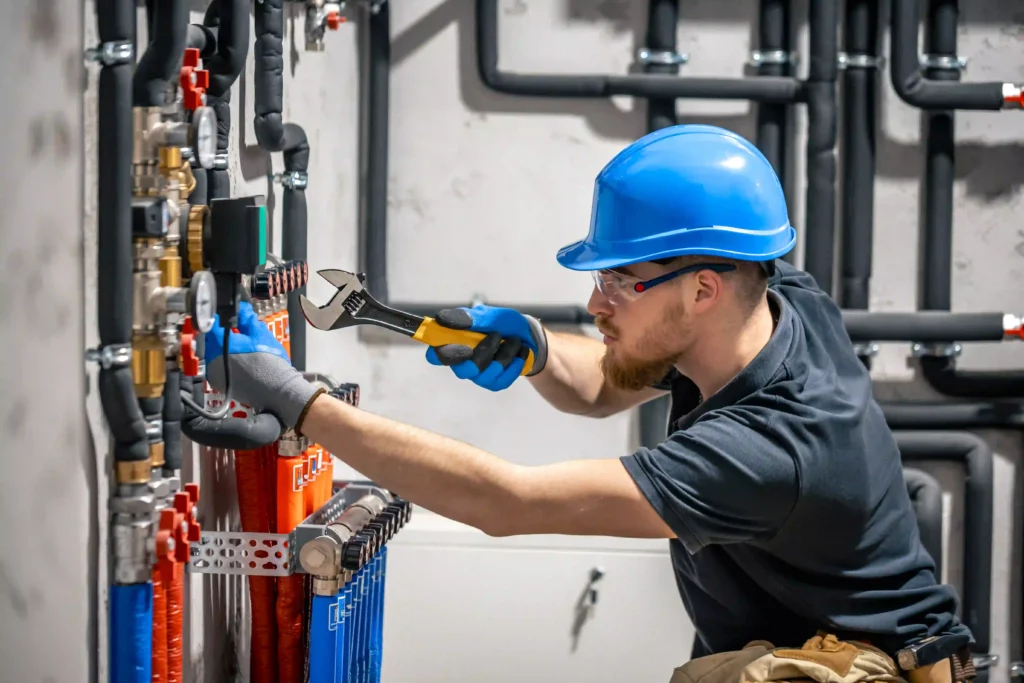
Underground infrastructure does not get the attention that paving, concrete, and building construction do — but it determines how every surface improvement performs over time. Commercial pipe installation in Charleston, SC encompasses storm drainage systems, sanitary sewer connections, water service lines, and utility runs that move water, waste, and utilities across a site reliably and in compliance with local and state regulatory requirements.
In the Charleston Lowcountry specifically, pipe installation is complicated by what’s under the ground: high water tables, saturated coastal soils, proximity to tidal waterways, and subsurface conditions that can change dramatically within a single parcel. A drainage system that functions well on an inland Carolina property may be completely insufficient on a coastal site that sits at three feet above sea level with tidal influence fifty feet away.
This guide covers what commercial pipe installation includes, the types of piping systems used on commercial sites in the Lowcountry, why site conditions here demand specific expertise, and what to look for when selecting a contractor for your project. For a direct overview of what Simmons Construction installs, visit our piping services page.
What Commercial Pipe Installation Covers
Commercial pipe installation on construction and development sites is distinct from residential plumbing or interior building systems. It refers specifically to below-grade, site-level pipe systems that manage water movement, waste conveyance, and utility distribution across a property:
Storm Drainage Pipe
Storm drainage pipe collects surface runoff from parking lots, rooftops, and paved areas and conveys it to an outfall, detention basin, or public stormwater system. On commercial sites, this includes:
- Catch basins and inlets — underground collection structures that capture surface water at low points in the grading plan
- Trunk lines and laterals — the pipe network that moves water from inlets to the outfall or retention structure
- Outfall structures — the controlled discharge point, often with velocity dissipation and erosion protection
Storm drainage pipe in the Charleston market is typically corrugated HDPE or reinforced concrete pipe, sized based on drainage area, design storm event, and the receiving water or detention system capacity. The Advanced Drainage Systems (ADS) product line is widely used on Lowcountry commercial sites for its combination of flow capacity, durability, and resistance to the chemical conditions in coastal soils.
For commercial properties that need a standalone drainage upgrade independent of new construction, Simmons Construction also provides drainage services in Charleston, SC as a direct service.
Sanitary Sewer Lines
Site sanitary sewer work connects the building’s waste system to the public sewer main or, on sites outside municipal service areas, to a septic system or private treatment system. Commercial sewer work includes:
- Gravity sewer main installation from the building to the tie-in point
- Cleanouts, manholes, and access structures at required intervals
- Force main installation where gravity drainage is insufficient — common on low-lying Lowcountry sites where the sewer system runs at or near grade
Sanitary sewer work on commercial sites is coordinated with the local utility authority — in Charleston County, that typically involves Charleston Water System or the relevant municipal authority depending on project location.
Water Service Lines
Water service line installation brings potable water from the public main to the building’s point of connection. Commercial projects often involve larger service line diameters than residential connections, fire suppression connections (where a separate fire line is required), and coordination with the utility authority on meter sizing and pressure zones.
Site Utility Runs
Broader site utility installation may include conduit runs for electrical and telecom, irrigation mainlines, and reclaimed water systems on applicable sites. On large commercial developments, utility coordination — making sure gas, electric, water, sewer, and communications runs do not conflict and are sequenced appropriately — is a critical project management function.
Lowcountry Site Conditions: Why Commercial Pipe Installation in Charleston Is Different
Several conditions specific to the Charleston area add complexity to pipe installation that contractors without local experience routinely underestimate:
High Water Table
Much of the Charleston Lowcountry sits at very low elevations with a high water table — in some areas, groundwater is within one to two feet of the surface. Trenching for underground pipe on these sites often encounters groundwater before the trench reaches design depth, requiring dewatering equipment to hold the excavation open during pipe installation. Contractors not prepared for dewatering will either cut corners on pipe depth or encounter significant schedule and cost problems when water enters the trench.
Saturated and Unstable Soils
Coastal soils in the Charleston area frequently include organic material, soft clay, and fill from previous land use — none of which provides stable bedding for underground pipe without preparation. Pipe bedding — the granular material placed beneath and around the pipe to provide even support and prevent differential settlement — is not optional on these sites. It is required for proper pipe performance and joint integrity over time.
Inadequate bedding in Lowcountry soils leads to pipe settlement, joint separation, and eventual infiltration failure that requires excavation and reinstallation. This is an expensive outcome that a competent contractor prevents by treating bedding as a non-negotiable installation requirement.
Proximity to Tidal Waters and Wetlands
A significant portion of commercial and industrial land in the Charleston area sits adjacent to tidal creeks, marshes, and jurisdictional wetlands. Pipe outfall locations near these areas require coordination with DHEC’s Office of Environmental Affairs and, in some cases, the Army Corps of Engineers. Outfall structures near tidal influence must account for backflow during high tide events — a factor that can require check valves, tide gates, or elevation adjustments to the outfall design.
Contractors unfamiliar with OCRM permitting requirements and tidal hydrology will not identify these constraints until they are already mid-installation. The result is either regulatory violations or expensive redesign. This is one of the most consistent differentiators between contractors with genuine Charleston Lowcountry experience and those without it.
Existing Subsurface Conflicts
Dense development in established Charleston commercial areas means underground work frequently encounters unmarked utilities, buried debris, old fill material, and subsurface conditions that differ significantly from what the drawings show. Before any pipe trench is opened, utility locating (811 call) is required — but private utility locating for on-site infrastructure not covered by 811 is equally important. An experienced contractor plans for subsurface surprises as a normal cost of doing business in this market.
Applications by Project Type
New Commercial Development
Ground-up commercial development sites require the full storm drainage system, sanitary sewer connection, and water service installation before surface improvements begin. The sequencing is critical: drainage pipe is typically installed after rough grading establishes the design elevations, before base course or paving begins. Paving over drainage infrastructure that hasn’t been properly installed or inspected is a recoverable problem — but only at significant cost.
For industrial and distribution center projects, where storm drainage must handle runoff from very large paved surfaces under heavy truck traffic, the drainage system design and pipe installation are among the most consequential decisions made during site development. Distribution and logistics center construction programs at Simmons include full storm drainage scopes coordinated with the overall site plan.
Commercial Parking Lot and Pavement Projects
Pavement projects frequently include drainage improvements — adding or replacing catch basins, extending trunk lines, or addressing existing drainage infrastructure that is undersized or failing. When a parking lot is being resurfaced or rebuilt, it is often the logical time to address drainage deficiencies that contributed to the pavement’s early deterioration. Commercial asphalt paving and drainage are closely connected: water that cannot move off and away from the pavement is the primary driver of premature failure in the Lowcountry market.
HOA and Community Infrastructure
Planned residential communities often have aging storm drainage infrastructure — corrugated metal pipe that has corroded, concrete pipe with joint failures, or undersized inlets that flood during moderate rain events. HOA boards in the Charleston area increasingly face the reality of replacing infrastructure installed twenty or thirty years ago. Simmons Construction’s HOA roads and driveways program can address both surface pavement and underlying drainage pipe in a coordinated replacement program.
Industrial Facilities
Industrial sites in the Charleston area — including manufacturing, processing, and logistics operations — have pipe installation requirements that extend beyond standard storm drainage. Industrial sites often need specialized containment drainage, process water lines, and secondary containment systems for hazardous material storage areas. Industrial facilities construction requires contractors who understand both the structural requirements and the regulatory compliance expectations for these systems.
What to Look for in a Commercial Pipe Installation Contractor
Demonstrated Drainage Design Comprehension
A quality contractor does not just lay pipe to the grades shown on the plans. They understand why the drainage system is designed the way it is — the tributary areas, the flow calculations, the outfall capacity — and can identify when field conditions require design adjustments before committing to an installation that won’t function correctly.
Proper Equipment for Lowcountry Conditions
Dewatering equipment, appropriate excavation machinery for tight or wet conditions, and sheeting or shoring capability for deeper trenches are not optional extras in the Charleston market — they are baseline requirements for professional pipe installation. A contractor whose bid assumes dry, stable conditions on a low-elevation coastal site has not adequately scoped the work.
Coordination with Civil Engineering
On permitted commercial projects, storm drainage systems are designed by a licensed civil engineer. The contractor’s job is to install the system as designed — but also to communicate promptly when field conditions require changes and to document as-built conditions for the engineer’s record. Good communication between the installation contractor and the design engineer prevents the small field deviations that can create long-term performance problems.
Permitting and Inspection Familiarity
Commercial drainage pipe installation in Charleston County involves inspection at multiple stages — including trench, bedding, and backfill inspections before the trench is closed. A contractor familiar with local inspection protocols keeps the project moving rather than experiencing delays because they did not know when to call for inspection.
For site work that also includes grading, excavation, and erosion control, having a single contractor coordinate all three scopes with drainage installation reduces scheduling gaps and communication breakdowns.
Questions to Ask Before Hiring a Commercial Pipe Installation Contractor
- Have you installed drainage systems on sites with high water tables in the Charleston area? How do you handle dewatering during installation?
- What pipe bedding specification do you use on Lowcountry sites, and how is it documented?
- How do you handle outfall locations near tidal water or wetland boundaries?
- Do you self-perform excavation, or is it subcontracted?
- Who coordinates with the civil engineer when field conditions require design changes?
- What inspection process do you follow for underground pipe before backfill?
- Can you provide references for comparable commercial drainage installations in the past two years?
Frequently Asked Questions
What types of pipe are used for commercial storm drainage in Charleston? The most common pipe materials for commercial storm drainage in the Charleston area are corrugated HDPE (high-density polyethylene), reinforced concrete pipe (RCP), and PVC for smaller-diameter applications. Material selection depends on pipe diameter, cover depth, loading conditions, and soil chemistry. Your civil engineer specifies the pipe material; the contractor sources and installs it to spec.
How deep does commercial drainage pipe need to be installed? Minimum cover depth depends on pipe material and the traffic loads above the installation. Standard commercial applications under paved parking lots typically require 12–24 inches of cover over the pipe crown, depending on pipe material and design specifications. Deeper installations may be required to achieve design grades on flat sites or to clear existing utilities.
Does Simmons Construction handle both drainage design and installation? Simmons Construction self-performs pipe installation as part of commercial site work and can coordinate with your civil engineer on drainage scope. Drainage system design is a licensed civil engineering function — Simmons works from engineer-stamped plans and coordinates with the design team throughout installation. For projects that do not yet have engineering, we can refer qualified local civil engineers and coordinate the overall project.
How does commercial pipe installation relate to paving work? They are closely sequenced. Storm drainage pipe installation is typically completed and inspected before base course and asphalt paving begins. Installing paving over uninspected or improperly installed drainage is a common source of future pavement failure — the drainage system may not function correctly, or settlement around the pipe can cause surface depressions and cracking. Working with a single contractor who manages both scopes ensures proper sequencing and coordination.
What areas does Simmons Construction serve for commercial pipe installation? Simmons Construction serves the greater Charleston metro including Charleston, North Charleston, Summerville, Goose Creek, Hanahan, and surrounding Lowcountry communities. See our locations page for full coverage details.
Get a Free Commercial Pipe Installation Estimate in Charleston, SC
Simmons Construction provides piping services and drainage installation for commercial development, industrial, HOA, and institutional clients throughout the Charleston Lowcountry.
Contact Simmons Construction to discuss your pipe installation scope, site conditions, and project timeline.
Sources and Further Reading
- Advanced Drainage Systems (ADS) — Commercial HDPE and drainage pipe product specifications and installation guidance
- South Carolina DHEC, Stormwater Permitting — State stormwater permit requirements for commercial land disturbance